
My Mother, My First Coach: How Powerful Questions Can Change a Life
My mother was my first coach.
When I was learning tennis, she insisted on private lessons — even if we could only afford 30 minutes. She believed that focused attention, honest feedback, and encouragement would help me improve, build confidence, and enjoy the game more. She was right. But her true coaching brilliance revealed itself years later, when I was 23 and engaged to my college sweetheart, John.
We loved each other, but we came from very different worlds. His family embodied old-money Connecticut — yacht racing, country clubs, skiing, and a traditional vision of marriage. I came from a large, middle-class Catholic family in which my father was an academic neurologist and my mother was a passionate advocate for the League of Women Voters who helped Democratic women get elected to public office.
Our family gatherings were more likely to involve Roy Rogers dinners and backyard badminton than country clubs and sailing. I loved tennis — but I also got seasick on boats. My mother liked John, but she sensed something I hadn’t yet fully acknowledged: the life he envisioned for me wasn’t the life I truly wanted.
And instead of telling me what to do, she coached me. She held up a mirror and asked thoughtful, sometimes difficult questions:
What would weekends on a boat really feel like?
Did I want children — or specifically three children?
What kind of life energized me?
Did I want to stay home, build a career, or create a life that combined both?
She never pushed. She simply helped me see what I had been avoiding. And once I saw it clearly, I knew. I didn’t yet know exactly what life I wanted — but I knew I didn’t want the life John was offering.
So, three months before the wedding, I made the heartbreaking but necessary choice to break off the engagement. That decision became one of the most important turning points of my life. It gave me the courage to pursue a path that was entirely my own: moving to New York City, building a corporate career, launching my own coaching and training business, writing three books, marrying later in life, and consciously choosing not to have children. In many ways, my mother’s coaching helped me claim the life I was meant to live.
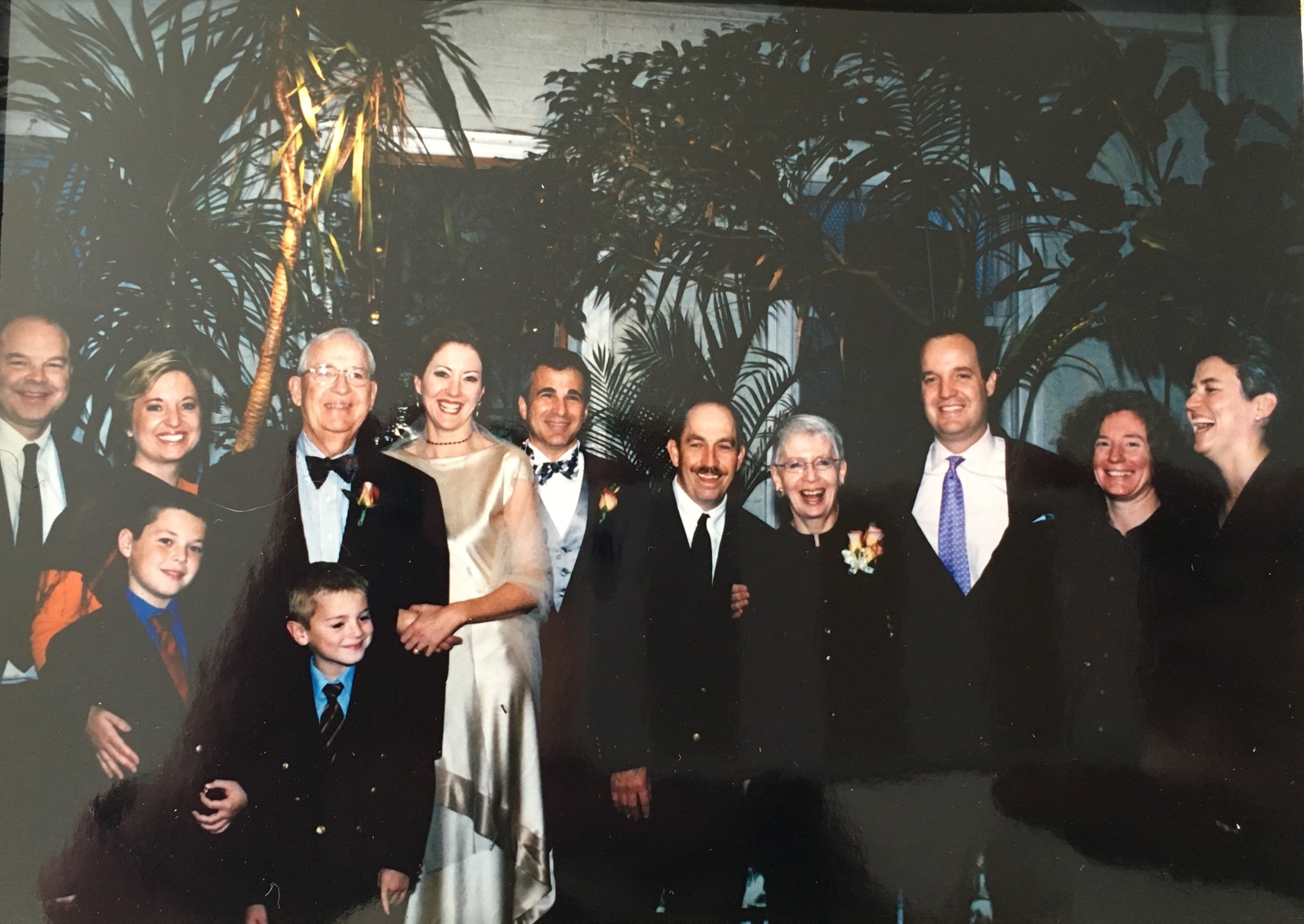
My wedding to my husband and love of my life, Stuart in 2004, my mother’s laughter says it all — she coached me toward the right “yes.”
Recently, a prospective client asked me a thoughtful question: “Tell me about a client who exceeded your expectations.” Immediately, I thought of Larry (pseudonym). Larry was in his late 30s or early 40s, highly successful in the compliance function of a large bank, and considered high-potential. But he was stuck.
He was hardworking, intelligent, and respected — yet largely invisible to senior leadership. He wanted more career options but didn’t know how to create them. He disliked self-promotion, avoided organizational politics, and had become pigeonholed as “the compliance expert.”
As we worked together, I began reflecting back patterns he hadn’t fully recognized:
He wasn’t networking.
He wasn’t speaking up in senior meetings.
He wasn’t communicating his broader ambitions.
Once he became aware of these patterns, our work deepened. Larry began exploring what success truly meant to him — not the version he had unconsciously inherited from others. He realized he didn’t want to remain solely a technical expert. He wanted to lead innovation, shape teams, and contribute on a larger scale. And that’s when the transformation began.
By the end of our coaching engagement, Larry had not only elevated his executive presence — from his appearance to how he communicated — but had also become significantly more visible to senior leadership. He began pursuing larger, more strategic roles that required travel, influence, and broader leadership. None of this had been on his radar when we first began. But once Larry clarified his “why,” he became willing to develop entirely new skills — organizational savvy, strategic networking, and the confidence to advocate for himself. He learned how to help others see his potential. And he succeeded.
Today, Larry is thriving in a broader, more energizing role that better reflects who he is and what he truly wants. I never told Larry what to do. Just as my mother never told me what to do. Instead, I offered observations, questions, tools, and a safe space for deeper reflection. That’s what powerful coaching does. Coaching isn’t about changing someone’s essence. It’s about helping people see themselves more clearly so they can make choices that align with who they already are.
That’s what my mother did for me. That’s what coaching did for Larry. And that’s what coaching can do for anyone willing to reflect, explore, and courageously challenge the stories they’ve been living.
I’d love to hear your coaching stories.
How has coaching changed your life?